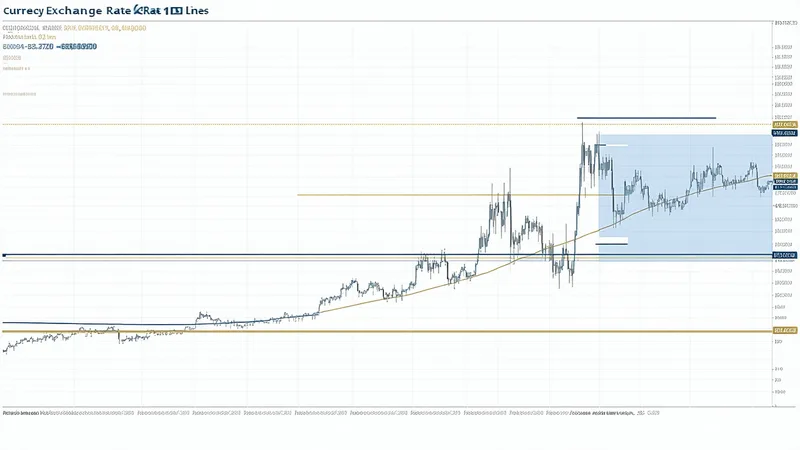
Currency volatility in APAC corridors does not announce itself. SGD/INR moved roughly 6% in the 12 months through mid-2024 — a range that, if unhedged, would have converted a 20% gross margin SaaS business billing in INR into something in the mid-teens. MYR depreciated meaningfully against SGD in 2023. PHP/SGD has moved 4–7% in annual ranges over recent years. For businesses with meaningful revenue or cost exposure in APAC currencies, FX risk is not a secondary concern layered on top of operations — it is an operational variable that directly determines whether a quarter makes its margin targets.
This guide covers the practical hedging instruments available to Singapore-based B2B treasury teams, the frameworks for deciding which to use, and the common structural errors that make hedging programmes fail even when the underlying reasoning is sound.
Identifying Your Actual FX Exposure
Before selecting a hedging instrument, you need an accurate picture of your FX exposure — which most businesses lack. The typical error is conflating the currencies in which invoices are denominated with the currencies in which you actually bear exchange rate risk.
Consider three scenarios:
- A Singapore SaaS company billing Malaysian clients in SGD: the customer pays in SGD, so the seller bears no MYR exposure. But if the customer is implicitly pricing the service against local MYR alternatives, a significant SGD/MYR move may cause contract churn. This is economic exposure, not transactional FX risk.
- A Singapore trading company paying Indonesian suppliers in USD: the transaction is USD-denominated, but if the company's SGD revenues are fixed, the company bears SGD/USD risk on the cost side.
- A Singapore IT services firm billing Indian clients in INR at a fixed monthly rate: every payment cycle, the firm receives INR and converts to SGD. The full INR receivable is transactional FX exposure, and the hedgeable quantity is the expected monthly INR inflow over the hedge horizon.
The exposure mapping exercise — running through each revenue stream and cost stream and identifying the currency of underlying economic value, not just invoice denomination — typically takes a half day but is the prerequisite for any hedging that actually reduces risk rather than creating a more complex position.
Forward Contracts: The Workhorse Instrument
For most B2B treasury teams without sophisticated derivatives infrastructure, the forward contract is the primary hedging tool. A forward contract locks in an exchange rate today for a future settlement date, eliminating the rate uncertainty on that specific future conversion.
The mechanics: your payment provider (or bank) quotes you a forward rate for, say, SGD/INR settling in 90 days. That rate reflects today's spot rate adjusted for the interest rate differential between SGD and INR — the forward points. Because India has historically maintained higher interest rates than Singapore, INR forward rates typically trade at a slight discount to spot (INR is in forward discount relative to SGD), meaning the forward rate for SGD/INR is slightly higher than spot — you get more INR per SGD in the forward contract than you would at today's spot rate. This is not a windfall; it simply reflects the carry differential and is priced efficiently.
Practical forward contract usage for an APAC-exposed B2B firm: identify your expected INR, PHP, or MYR receivables or payables over the next 60–90 days, contract forwards for 70–85% of that expected amount (not 100% — you want to preserve flexibility for volume variance), and roll the remaining 15–30% at spot at the time of settlement. This approach hedges the core currency risk while leaving room for actual volume to come in above or below forecast.
A Singapore-based logistics software company with MYR 450,000/month in receivables from Malaysian clients started a 60-day rolling forward programme in early 2024. By locking in SGD/MYR at rates 0.4–0.8% better than the eventual spot rates over that period, the programme added approximately SGD 3,500/month in effective margin on what had been unhedged exposure — not a dramatic number, but a consistent one that compounds over time and, more importantly, eliminated the month-to-month revenue variance that was making financial planning difficult.
Natural Hedges: Often Overlooked
Before reaching for financial instruments, the most cost-effective hedging approach is identifying natural offsets within your business flows. A natural hedge exists when you have both revenues and costs in the same currency — the FX exposure partially cancels without any instrument required.
For a Singapore SaaS company that both bills some clients in PHP and pays Filipino contractor payroll in PHP, the net PHP exposure is the difference between PHP inflows and PHP outflows. If those are roughly balanced, the FX risk is correspondingly small. Holding a PHP balance in a multi-currency wallet — rather than converting each transaction to SGD — preserves the natural hedge and eliminates conversion costs on flows that will simply be converted back.
We are not saying natural hedging is always achievable — many businesses have asymmetric currency exposure that cannot be internally offset. But before paying forward contract spreads and margins, it is worth mapping natural offset opportunities. The margin saving from eliminating unnecessary round-trip conversions is often larger than the saving from financial hedging.
Options Strategies: When and Why
Currency options — specifically vanilla call or put options on APAC pairs — provide downside protection while retaining upside participation. For most B2B treasury teams in the SGD 5M–50M annual revenue range, options are rarely the right tool. The premium cost is material, and the hedging benefit rarely justifies it compared to a disciplined forward programme.
Options become relevant in two scenarios: (1) when you have a large one-off future payment whose occurrence is uncertain — an M&A consideration denominated in a foreign currency, or a major contract whose signing is pending — and you want protection without committing to a forward contract that would leave you with an open position if the event does not materialize; and (2) when your CFO or board requires guaranteed floor prices on certain flows and the cost of option premiums is acceptable relative to that governance requirement.
For regular recurring APAC payroll and supplier payments, forwards are cheaper and simpler. Options are a hedge against optionality — most treasury teams do not need to pay for that.
Execution Quality: The Hidden Variable
Even a well-structured hedging programme can deliver poor outcomes if execution quality on the underlying spot and forward transactions is poor. Execution quality means: the rate you book versus the mid-market rate at the time of execution, the transparency of the spread, and the availability of forward quotes across the tenors you need.
A business that has hedged its MYR exposure in theory but executes the underlying SGD/MYR conversions through a bank charging 1.5–2.5% over mid-market is not hedged on economics — the execution cost exceeds the hedging benefit. The practical implication: hedging programme design and execution platform selection need to be considered together. A treasury function that can access sub-1% spreads on SGD/INR and SGD/MYR conversions, with transparent forward rate quoting and same-day execution, will run a more effective programme than one paying opaque spreads through a correspondent banking relationship.
APAC currency markets are not uniformly liquid. SGD/MYR and SGD/HKD have narrow spreads due to high bilateral trade volume. SGD/IDR and SGD/PHP are less liquid, and spreads widen meaningfully on large transactions or in periods of regional market stress. Treasury teams should build execution benchmarking into their hedging programme review — comparing execution rates against publicly available mid-market data on a transaction-by-transaction basis at least quarterly.
Structuring a Hedging Policy
A hedging policy document does not need to be complex to be effective. The core elements are: which currency exposures are hedgeable, what percentage of each exposure to hedge (typically 60–80% of rolling 90-day expected flows), which instruments are permitted, which execution counterparties are approved, and who in the organisation has authority to enter hedging transactions. Without a policy, hedging decisions get made ad hoc — sometimes aggressively, sometimes not at all — which typically produces worse outcomes than a systematic but modest programme.
The goal of an APAC hedging programme for a B2B business in the SGD 5M–30M revenue range is not to profit from currency views. It is to reduce the variance of your SGD-equivalent revenue and cost outcomes, making planning more reliable and reducing the risk that a single quarter's FX move becomes a board-level discussion. Treated as risk management rather than financial engineering, hedging is a straightforward operational tool — less exotic than it often appears from outside the treasury function.